Come see “Amache Rose,” a film by Billy Kanaly

Join us for this special viewing!
Tuesday February 4 at 5:30 pm
Carla Madison Recreation Center
2401 E. Colfax Avenue
Free Parking behind the Center
In 1942, the United States Government established the concentration camp Camp Amache in the high desert of southeastern Colorado near the town of Granada. Japanese American citizens were confined there because of the paranoia and fear generated by Japan’s aggression during  World War II. These citizens were incarcerated at the camp until 1945. Today, the action is seen as one of the great tragedies of misjudgment in U.S. history.
Site of Camp Amache concentration camp
Credit: Denver Botanic Gardens Films
Housed in stark barracks, having been stripped of most of their belongings, the internees endured their imprisonment with courage, resiliency and by practicing the tradition of Wabi Sabi, the Japanese art of finding beauty in imperfections. The internees planted trees and gardens in the hostile high, dry, windy environment around them. They used discarded concrete for rock gardens. They used native cactus and rabbitbrush shrubs in their garden designs.
The Amache rose
Credit: Denver Botanic Gardens Films
The ”Amache Rose” film by Billy Kanaly tells the poignant story of a wild rose discovered at Amache that was not native to the area. It could never have grown there. An Amache prisoner on work release must have found the rose in another region and brought it back to Amache to be planted there. 80 years later, the rose has endured. Denver Botanic Gardens is caring for clippings of the rose in their greenhouse.
Billy Kanaly
Credit: Denver Botanic Gardens Films
“Amache Rose,” directed by Billy Kanaly is the first film produced by the new film department of Denver Botanic Gardens (DBG), Denver Botanic Films. It has been featured at film festivals across the country, including the Denver Film Festival.  Billy Kanaly is heading up Denver Botanic Gardens Films and its mission to connect people to plants through film.  A former performer for the Irish Dance Troupe Riverdance, Kanaly brings a range of creative perspectives to his role. He is committed to telling the abundance of unique stories that plants have to tell, not only how they grow but who grows them and why. The film “Amache Rose” is the unique story underlying the important connections between people and plants, how nature illuminates the human experience, and how humans rely on plants and nature to make sense of and complete their world.
Mike Bone, Curator of Steppe Collections at Denver Botanic Gardens inspects a rose at Amache
Credit: Denver Botanic Gardens Films

Please join us for this amazing, free in-person program. Billy Kanaly will show his film and talk about its production and how the Amache experience affected him. Survivors of Amache are among those interviewed in the documentary. Dr. Bonnie Clark, Professor of Anthropology at the University of Denver, whose work at Amache is a focus of the film, is also featured.

A City Park Friends and Neighbors Board meeting will follow the presentation and the public is invited to join in. As always, we look forward to hearing your insights and any questions you may have about City Park.

Amache Concentration Camp
Credit: Japanese American Museum (2015.100.172a)

Jolon Clark to Speak at CPFAN Annual Meeting, April 2, 5:30 pm, Carla Madison Recreation Center

There will be no CPFAN General Meeting and Program in March. Our Annual Meeting, where the membership will elect Board members for the 2024-25 term and vote on two proposed bylaw changes will take place on April 2 and we encourage all our members to attend.  If you are interested in serving on the CPFAN Board of Directors in 2024-25 please contact Georgia at info@cpfan.org. We welcome your interest and participation. The agenda and protocols for the Annual Meeting will be published in the next newsletter that will go out by March 18, giving fifteen days notice per our bylaws.

We are very pleased to announce that Jolon Clark, Executive Director of Denver Parks and Recreation will be the speaker at our Annual Meeting. Following his presentation, Clark will open the floor to Q & A. He is looking forward to hearing your ideas and insights about the future of Denver’s parks.

Jolon Clark, Executive Director, Denver Parks and Recreation
Jolon Clark was born and raised in Denver. Denver’s Recreation Centers and outdoor spaces were central to his childhood. He remembers the tree house he and his friends built in an ash tree in their Washington Park neighborhood. “There were three branches where we would sit for our meetings,” he says of the secret clubhouse. Soccer, swimming and basketball were the other activities he enjoyed in the “magical’ world of his Denver outdoor experience. In fifth grade, he participated in a Balarat Outdoor Education overnight program and describes this mountain experience, especially the night hikes, as life-changing.  As a South High School student, he learned about the Venice on the Creek program launched by Joe Shoemaker and the newly founded Greenway Foundation. Clark joined the program and punted gondola-style wooden boats up and down Cherry Creek between Larimer St and Confluence Park during his high school and college summers, regaling his passengers along the way with the history and culture of the area.
Courtesy, The Gondola Blog by Greg Mohr

Inspired by Joe Shoemaker’s vision of trails, parks and gardens flowing through Denver, Clark joined the Greenway Foundation team and among other accomplishments, founded Spree (South Platte Environmental Education), that introduces Denver area youth to the river through excursions, day camps, internships and summer programs. In 2019, The Greenway Foundation awarded Clark the annual Hero of the River Award in recognition of his significant and longstanding impact on the continued improvement/evolution/ sustainability of the South Platte River Watershed.

Finding his passion, Clark went on to earn a degree in non-profit management and a CSU degree in Natural Resources. Clark was elected to the Denver City Council in 2015 to represent District 7. While on council, he was the architect behind the $40 million a year Parks Legacy Fund, the creation of the new Office of Climate Action, Sustainability & Resiliency, and the $40 million a year Climate Action Fund.

In 2023, Clark was picked by Mayor Michael Johnston to be the Executive Director of Denver Parks and Recreation. “The circle closes,” says Clark. “This is my dream job.” He is proud of DPR’s new initiative to donate bison herds from Denver parkland to Tribal Nations. He looks forward to further implementation of Denver’s Game Plan for a Healthy City, emphasizing the need to “provide good stewardship of every drop of water.” Undeterred by the financial challenges facing Denver and subsequently DPR, he looks forward to minimizing the impact with creative planning and partnerships. In particular, he wants to empower volunteers to engage more fully in Denver’s parks. He talks about the value of being nimble and thinking outside bureaucratic boxes.

Learn more about Jolon Clark’s inspired vision for Denver’s parks on April 2. You are in for a treat!

Explore City Park’s Flowerbeds With Us, Sept. 5

A group of people standing in the grass.


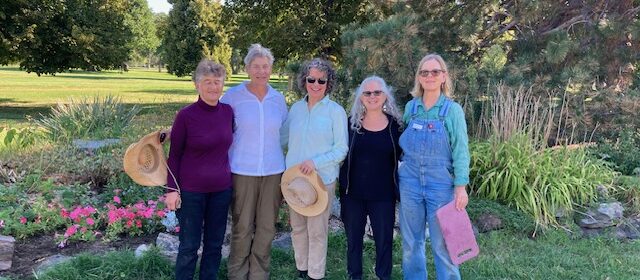
City Park Friends and Neighbors invites you to join us for a tour of City Park’s flower gardens on Tuesday, September 5 from 5:30 – 7 pm. We will meet off the circular parking lot accessed from Montview Blvd and turning south to the roundabout. The tour will be led by City Park’s Adopt-a-Flowerbed Coordinators, Maria Flora (GPHC) and Jackie June (South City Park). Adopt-a-Flowerbed is a Denver Parks and Recreation volunteer program that is in its third year of operation in City Park. Since the pandemic when the park’s Horticulturists struggled to maintain the area’s many flowerbeds, volunteers from neighborhoods around the park have joined teams that tend gardens once a week (or as able).

As we stroll through the park, from Ida’s City Park Rock Garden facing the roundabout to MLK, Sopris, and Burns Gardens west of the Pavilion and then east to the Lilac Lane, Benedict Rose Garden and Cordova Rock Garden ending at the roundabout where we began, Maria and Jackie will point out perennials and annuals contained in each flowerbed, and relate the interesting stories behind them as well. We may well see birds and animals of interest along the way.

The tour is free to the public. We look forward to seeing you on September 5. We promise a unique and enjoyable experience in our park – City Park, the People’s Park.

New City Park Must-Read:
Memoirs of a Junkyard Dog by Tom Morris

Overlooking Ferril Lake and just to the east of the Pavilion are two benches donated to the park in honor of two friends who contributed much to City Park and the nearby South City Park neighborhood. The commemorative plaque at the foot of one bench reads: “In Memory of Diane Lauen: Sit, rest and enjoy the park she loved,” and the other reads: “In honor of Tom Morris: He jazzed up City Park.”

Diane and Tom were best friends and shared a passion for City Park. Diane, an artist and activist who was the Graphic Designer for the Denver Public Library, passed away in 2006. She was beloved by many who appreciated her bright intelligence, her wit and her unique flair for living. You could just see City Park from her home on Adams St. and it was a view she savored.

It was Diane who dubbed her friend Tom, with whom she shared office space and many years of happy conversation, stories and fun, “City Park’s Junkyard Dog,” and Tom still embraces the designation with relish. He actually wanted his plaque to bear that inscription instead of the reference to his idea of creating the City Park Jazz series. In his new book, Memoirs of a Junkyard Dog, Tom writes: “It is an excellent description of my life in Denver’s City Park South neighborhood. I have a reputation for being angry as, you’ll have to agree, is what makes a junkyard dog worth its expense. I managed to see the burglars before they got over the fence.”

Memoirs chronicles Tom Morris’ experiences as an advocate for neighborhoods, parks and citizen activism. An architect and journalist, Tom combined his talents to deliver one basic message – that citizens “could have a role in their own lives in defense of what they valued.” He practiced this belief in South City Park, where he lived for thirty odd years, with working to establish practices like downzoning to protect the diverse, unique character of the neighborhood from massive high rise development.

When Tom turned his eye to neighboring City Park, he found more challenges. By garnering the support of the public, he was able to spearhead successful opposition to the building of a fire station in the park at 17th Avenue and Jackson St. (1982), and an aquarium (also 1982) at the ball fields north of the Museum of Nature and Science.  He played significant roles in preventing the restoration of the Pavilion as office space for Denver Parks and Recreation (1991) and the installation of a 13 acre playground, the City Loop (2014) in the western portion of City Park.

Far from just opposing things, Tom contributed to the continued health and life of City Park in numerous ways. In 1986, he proposed and helped implement the idea of free jazz concerts, called City Park Jazz, on Sunday evenings in the City Park bandstand. Today, City Park Jazz, Inc is a non-profit that provides ten concerts every summer to many thousands of fans of all ages, ethnicities and socioeconomic backgrounds.

Memoirs of a Junkyard Dog can be ordered through Amazon.com. Order it today and learn more about one of Denver’s great heroes, Tom Morris, Junkyard Dog and Beyond.

https://www.amazon.com/Memoirs-Junkyard-Dog-Tom-Morris/dp/B0CDYYJFRB/ref=sr_1_1?crid=2602CKGG3J1CS&keywords=memoir+of+a+junkyard+dog&qid=1692808802&s=books&sprefix=Memoir+of+a+junk%2Cstripbooks%2C130&sr=1-1

Tom Morris & Georgia Garnsey
Horticulturists Tour Sopris/Burns/MLK Gardens in City Park

On August 16, Denver Parks and Recreation’s (DPR) Horticulturists toured ten gardens in the Denver park system. City Park’s Sopris/Burns/MLK Gardens west of the Pavilion were chosen as one of the ten. Other parks chosen for their beautiful and unique gardens were Dension Park (11th and Quebec) that features a native wildflower meadow and perennial garden and Washington Park’s Mount Vernon Garden (South Downing Street & East Louisiana) planted with many native perennials and grasses.

City Park Horticulturist, Aaric Starks greeted the City Horticulturists and welcomed them to this special part of City Park. Deb Gallegos was recognized for her particular care of the Burns Garden. He also recognized the efforts of City Park’s Adopt-a-Flowerbed volunteers in tending all the park’s flowerbeds since 2021.

Julie Lehman & Laurel Mohr at the Sopris Garden’s secret door

Julie Lehman, Denver Horticulture and Open Space Manager, with offices in the City Park Greenhouse, was a tour participant. She was greeted by the Adopt-a-Flowerbed Captain for the Sopris Garden, Laurel Mohr who pointed out some of the marvels she and her team discovered while gardening in this part of the park. Julie was especially taken with a secret door painted on one of the perimeter trees. She remarked on this artist’s affinity for some of the features of this year’s Sopris plantings, like the beds filled with kale that might inspire images from Dr. Seuss!

Spend some time in the Sopris/Burns/MLK Gardens and visit Dennison Park and Washington Park as well to get your own sense of DPR’s evolving horticultural philosophy.

New Project at Denver Museum of Nature and Science
Historic east entrance to the Denver Museum of Nature and Science
Courtesy, Denver Public Library, Western History Department

The Denver Museum of Nature and Science (DMNS) is in the preliminary stages of envisioning a transformation of the east entrance and plaza outside the Museum into a more accessible and inviting space.  The project is called the East Plaza Revitalization Project. Plans include revealing the original, historic staircase leading to the museum (see attached photo), now encased in a canopy that serves as the entrance to the Infinity Theater. Adding outside seating and making changes to the landscaping, including the removal of evergreen trees for security reasons, are additional goals. Improvements to the Infinity Theater Lobby are envisioned. The project also aims to offer improved programs like regular sensory-friendly screenings and Free Night Programming.

Another goal of the East Plaza Revitalization Project is to create spaces for private events like weddings and parties. Traffic studies for the feasibility of these uses are anticipated.

1 2 3 4 5 48